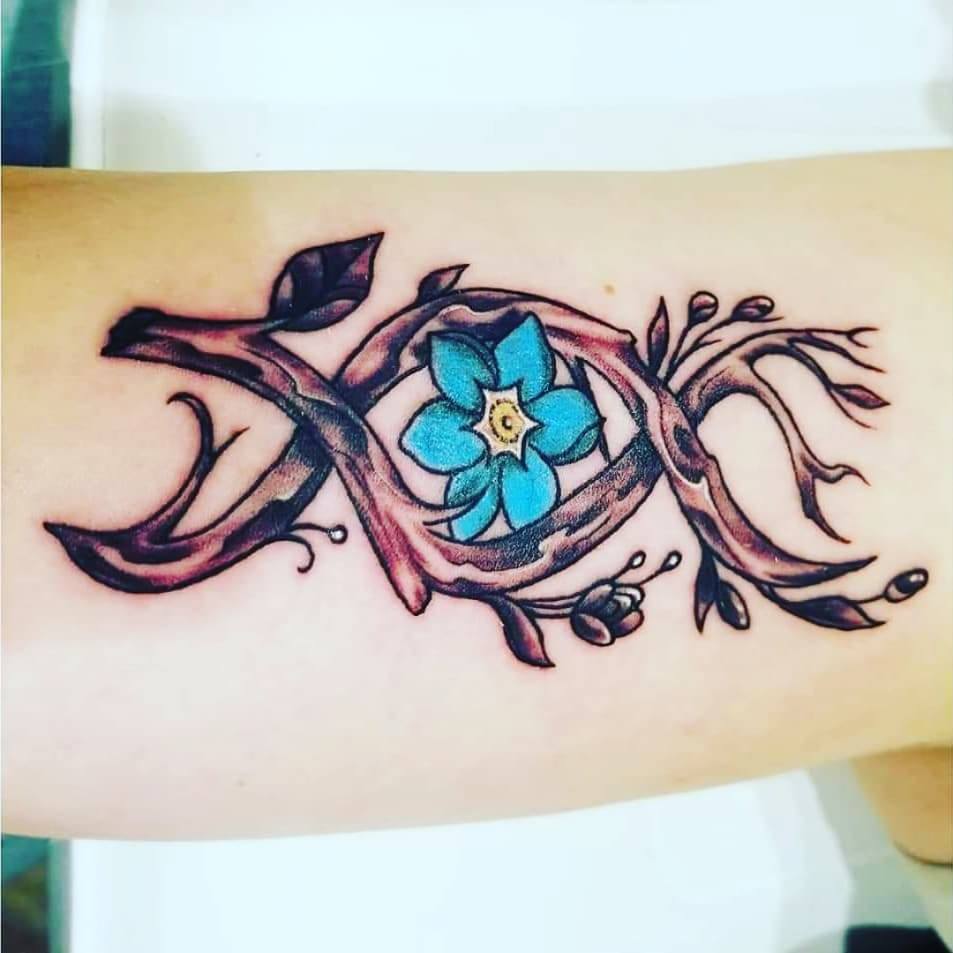
My name is Katarina, and I am a habitual aborter.
Doesn’t that just punch you in the gut, “habitual aborter”?
“Abortion”, in today’s vernacular, infers that I had a choice, that I chose to end my pregnancies. But, believe it or not, “abortion” is a medical term for the termination of a pregnancy, whether it was induced or happened spontaneously.
After meeting with my new OBGYN (having set an appointment with her after deciding that the first OB I had met with wasn’t the best fit for my situation), I saw “habitual aborter” listed as one of my “Conditions and Diagnoses”. I hadn’t realized that every doctor visit was accompanied by a diagnosis that I could access through my patient portal on the clinic’s website. After that first meeting with my new OB, I was looking through my patient portal, looking at my weight through the years along with results from various blood tests. Through my curious searching, I found the “Conditions and Diagnoses” tab. I could see that in 2018, I had a lower respiratory infection and in 2021, I had a diagnosis of “Acne Vulgaris” because I had asked my doctor about a better face wash. Everything I have ever mentioned to a doctor all the way back to 2010 was documented and tied to a condition or diagnosis.
And then I saw it, “Habitual Aborter”, preceded by diagnoses of “Recurrent Pregnancy Loss”, “History of Recurrent Miscarriages, not currently pregnant”, and “Complete Miscarriage”. “Habitual Aborter” stood out against the rest, and not because it was the most recent diagnosis.
I am a habitual aborter.
I had a handful of people cringe when I mentioned starting a blog titled “Tales of a Habitual Aborter”. The concern being that people may make assumptions about me and my blog based on its title. Although I decided to use “Living with Recurrent Pregnancy Loss” as the main title of this blog, I kept “Tales” as a subtitle. First, if people want to judge something based on what they deem to be an offensive term, that’s on them. You’re not supposed to judge a book by its cover, remember? Second, if you’re taken aback by the term, welcome to my world. Consider yourself lucky if you don’t identify with it. But why should I have to, on top of the emotions of trying to conceive and miscarriage, make you comfortable with my diagnosis? It’s a medical term, whether you agree with it or not. My OBGYN has called me a habitual aborter (not to my face), as a way to medically describe my situation. You don’t have to remind me of what “abortion” means in everyday conversation.
While we’re at it, let’s talk about the term “chemical pregnancy”. A chemical pregnancy is loosely defined as an early miscarriage, generally within the first 5 weeks of pregnancy. All four of my losses occurred at/around 4.5 weeks, so they are all subsequently titled as “chemical pregnancies”. People confuse “chemical” with “not real”. I’ve been asked if I was even actually pregnant since my losses were so early. I admit that I lost a lot more emotionally than I did physically, but that doesn’t mean that I don’t have a reason to grieve. My losses aren’t any less significant compared to someone who was further along. It’s not about whose loss hurt more, it’s about the hurt itself.
Miscarriage is common, one in four (I’ve also seen one in five) pregnancies end in miscarriage. I suspect that the number is higher; if I didn’t track my cycle as religiously as I do, I could have easily missed that I was ever even pregnant, as a “chemical pregnancy” can be mistaken for a late period. Miscarriage is so common, but it’s not really talked about. We’re not warned, as young women learning about our bodies, how common miscarriage is. Or maybe we are, but we’re not warned about how much it actually hurts; just because it’s common doesn’t mean it’s an easy experience. And even if we were warned, if we were made to be prepared for it, nothing can actually prepare you for the innocence that is taken away with a pregnancy loss. And each loss takes another ragged chunk of innocence from you, a chunk that you didn’t realize you even still had.
Miscarriage is hard. My third and fourth losses were not given the same grieving time and space that the first two were, and I am comfortable with that fact, but that doesn’t mean that any given loss was easier than another.
With each loss, I have learned that I am stronger than I previously knew. And the previous loss, in relation to the then-current one, reminds me that I’ll survive the world crashing down around me, one way or another. I’ve learned how to grieve, cry it out, be sad, and accept what life has given me. I certainly can’t “move on” in the sense of “getting over it”, though. These losses are a part of me. I’m not a different person now, but there’s a new part of me that grows with each loss, never overtaking who I was to begin with. There are two very different sides of me, swirled together into one (mostly) functioning being.
Each loss has also brought an additional layer of concern. Statistically, things could still work out for us. But general statics aren’t comforting when your personal statics reflect a 0% success rate. “At least it was early” and “at least you can get pregnant” are also not comforting, but I’ll save that for another post (in the meantime, if you have said those things to me, know that I know that you meant well by it and I hold no hard feelings!)
Miscarriage is isolating. How can something so common make you feel so alone? I believe, in part, because we’re told to keep our pregnancies to ourselves until the second trimester. It’s almost as if we’re saying that pregnancy doesn’t really count until the second trimester. And therefore, if it doesn’t count as a pregnancy, we shouldn’t be sad. We certainly shouldn’t burden others with something that doesn’t count! So we keep it to ourselves, we suffer alone and we suffer in silence.
I’m here to break that silence. We’re all allowed to grieve in whatever healthy way we feel is best; be as loud (or quiet) about your losses as you want. I choose to be loud.
My name is Katarina, and I am a habitual aborter.
 Living with Recurrent Pregnancy Loss
One response to “Tales of a Habitual Aborter”
I am a believer that it DOES count from day 1. I am very saddened by your loss-each and every one.
LikeLike